Trikala - Script of God Movie Review: A Misconceived Mythological Disaster That Fails on All Fronts
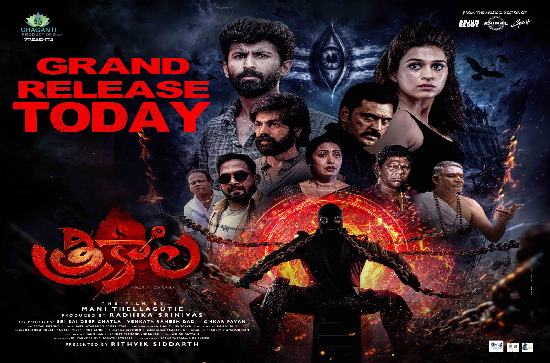
Promoted heavily as a pathbreaking mythological fiction thriller centered around the spiritual secrets of Sanatana Dharma, the newly released Telugu film Trikala - Script of God falls completely flat on its face. Directed by Mani Tellagooti and produced by the duo Radhika-Srinivas, the film made its theatrical debut across the globe on May 28, 2026, via global presenters Chaganti Production LLP.
Despite boasting pre-release buzz surrounding its high-end visual effects and a marquee cast headlining Shraddha Das, Master Mahendran, and Ajay, the actual theatrical output stands as an exhausting, painfully hollow cinematic experience that fails to justify its ambitious premise.
Trikala Movie Component Analysis
| Department | Cast & Creative Crew |
| Lead Actress | Shraddha Das |
| Primary Cast | Master Mahendran, Ajay, Aamani, Sahithi Avancha, Ambati Arjun |
| Director / Writer / Editor | Mani Tellagooti |
| Production House | Radhika–Srinivas Productions |
| Global Distribution | Chaganti Production LLP |
| Music Composer | Harshavardhan Rameshwar |
| Cinematographer | Pavan Chenna |
| Genre | Supernatural / Mythological Thriller |
| Final Rating | 1.5 / 5 |
The Plot: A Messy Blend of Spirituality and Chaos
The core storyline of Trikala allegedly attempts to detail an epic battle between divine righteousness and dark supernatural entities. When a dense, ancient malignancy threatens to engulf humankind in total darkness, a mystical divine force of light manifests to re-establish cosmic balance.
Shraddha Das anchors the narrative in a radically redesigned spiritual avatar, flanked by Master Mahendran, who portrays a high-energy warrior tasked with combating physical manifestations of evil, and Ajay, playing a powerfully intense character with mysterious motivations. Veteran actress Aamani is brought in to ground the film's heavier emotional chords. However, instead of weaving a compelling tapestry of cultural heritage and suspense, the narrative swiftly disintegrates into an unmitigated chaotic mess of confusing timelines and poorly explained mythological rules.
Technical Performance and Execution Flaws
The First Half: Boring Setup and Clunky Exposition
Director Mani Tellagooti, who has shockingly handled the writing, direction, and editing single-handedly, displays a severe lack of narrative grip right from the introductory frames. The world-building is incredibly clunky, relying heavily on endless paragraphs of dry, verbal exposition to explain the spiritual underpinnings of Sanatana Dharma rather than showing them visually. While the initial tracking shots inside the dense forest backdrops by cinematographer Pavan Chenna hold minor atmospheric promise, the pacing drags severely. The intervals between character arrivals feel excruciatingly long, culminating in a highly predictable, underwhelming pre-intermission block.
The Second Half: Chaotic Editing and Severe Visual Exhaustion
Post-interval, the movie completely goes off the rails. The screenplay frantically hops between supernatural horror tropes and grand mythological fantasy without establishing an organic bridge between the two. The editing by Tellagooti is erratic at best; scenes chop abruptly before characters can establish any real emotional stakes, leaving audiences disconnected.
The highly publicized climax, designed to display a massive showdown between the forces of light and darkness, turns into a noisy, over-the-top screaming match that lacks any structural logic, concluding the two-hour-and-seven-minute runtime on an immensely exhausting note.
Performance and Technical Demerits
Where the Film Fails Most:
Direction & Writing: Mani Tellagooti’s script lacks a singular focus. The dialogue is overly preachy, and the pacing bottlenecks make a short runtime feel like an endless ordeal.
Visual Effects (VFX): Despite claims of utilizing high-end modern technology, the VFX work is remarkably amateurish. The digital renders of divine light, mystical creatures, and supernatural combat look poorly rendered and severely dated, unintentionally ruining the gravity of important spiritual sequences.
The Cast: Shraddha Das tries her best to deliver gravitas to her unique look, but her character is written with zero emotional depth. Master Mahendran’s action sequences feel heavily detached from the main plot, while Ajay is completely wasted in a loud, heavily stereotyped character arc that fails to leave any lasting impression.
Soundscape and Visual Aesthetics
The technical execution of the project remains actively counterproductive to its narrative:
-
The Audio Failure: Music composer Harshavardhan Rameshwar, who previously earned high praise for his work on blockbusters like Arjun Reddy and Animal, delivers an unexpectedly frustrating output here. His background score is aggressively loud, attempting to forcefully create artificial tension in scenes where the writing is completely flat. Instead of providing spine-chilling suspense, the heavy-handed orchestration simply induces a massive headache. Even the highly elevated maternal track "Amma" feels artificially forced into the narrative block, completely blunting its emotional potential.
-
The Cinematography: While Pavan Chenna captures some decent framing within the natural forest terrains, the excessive reliance on flat green screens and messy digital color grading completely strips the visuals of any authentic grandeur.
Verdict: A Grand Mythological Misfire
Trikala - Script of God is a textbook example of how massive ideas can suffer an absolute breakdown without a strong script and cohesive execution. While its attempts to market non-theatrical dubbing and satellite rights might yield business in neighboring markets, the theatrical reality is a severe disappointment. It fails to operate successfully as a thriller, a horror flick, or a spiritual homage, making it an entirely skippable, frustrating theatrical experience.
Rating: 1.5/5